
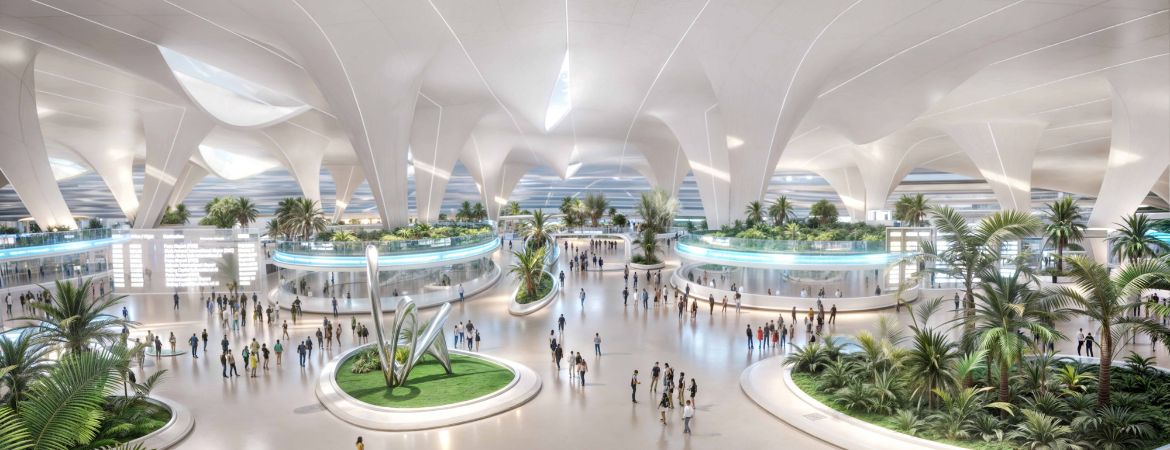
Airport Show 2026 to spotlight technologies reshaping airport services and passenger experience.
The Middle East continues to accelerate one of the world’s most ambitious airport development programs, with the United Arab Emirates and Saudi Arabia firmly at the center of regional aviation growth.
Across the Middle East, Africa and South Asia, governments and airport operators are investing heavily in new terminals, runway capacity and digital infrastructure to meet rising passenger demand and strengthen global connectivity. A significant share of this investment is being driven by the Gulf, where aviation remains a cornerstone of national diversification strategies.
Within the MENA market, airport construction projects are already well advanced, with close to 80 per cent of total project value in pre-execution and execution phases. Saudi Arabia accounts for the largest portion of the pipeline, followed by the UAE, reinforcing the two countries’ roles as the region’s dominant aviation hubs.
Airports in both markets are also placing sustainability and operational efficiency at the core of their expansion strategies. Renewable energy systems, electric and autonomous vehicles, energy-efficient terminal designs, smart waste management and digital platforms powered by artificial intelligence and the Internet of Things are becoming standard features in new and upgraded facilities.
These priorities will be in focus at the 25th edition of the Airport Show, taking place at Dubai World Trade Centre from 12 to 14 May 2026. The event is expected to welcome more than 150 exhibitors from over 30 countries, alongside more than 7,000 industry professionals and 120 hosted buyers.
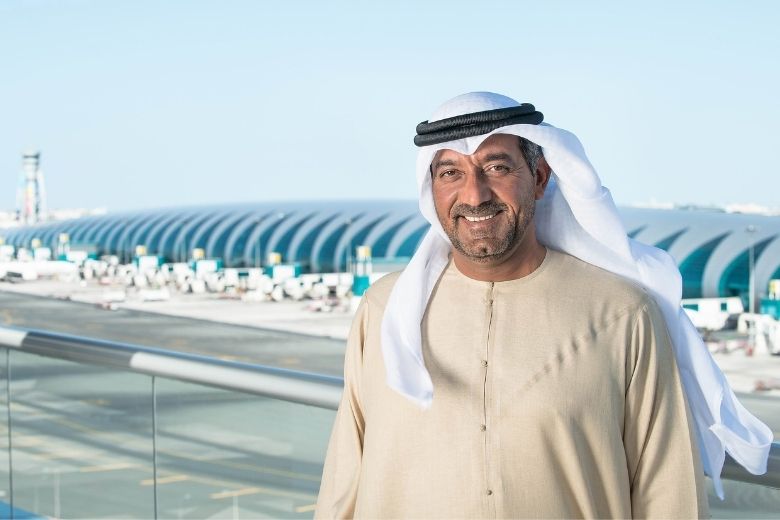
Held under the patronage of His Highness Sheikh Ahmed bin Saeed Al Maktoum, President of Dubai Civil Aviation Authority, Chairman of Dubai Airports and Chairman and Chief Executive of Emirates Airline and Group, the exhibition will once again serve as the region’s leading airport industry platform. The show will feature co-located conferences including the Global Airport Leaders’ Forum, Airport Security Middle East, the ATC Forum and the Women in Aviation Middle East Conference.
Speaking ahead of the event, His Highness Sheikh Ahmed said the industry shared a common ambition to build smarter, safer and more sustainable airports while continuously improving services for airlines and passengers. He added that Airport Show 2026 will provide an opportunity to align visions and explore practical solutions shaping the airports of the future.
May Ismail, Event Manager at RX Middle East, organizer of the Airport Show, highlighted the scale of the opportunity facing the sector. Global passenger numbers are forecast to reach 17.7 billion by 2043, while Middle East traffic alone is expected to reach 530 million passengers over the same period. She noted that the region’s large population, expanding tourism and growing airline networks are driving sustained investment in infrastructure and technology to deliver seamless and efficient passenger journeys.
UAE and Saudi Arabia dominate regional spending
According to industry estimates, the Arabian Gulf airport development pipeline alone stands at approximately US$183 billion, reflecting extensive renovation, expansion and new-build programmes. Two projects in particular in Dubai and Jeddah –represent the largest share of airport spending across the wider Middle East and North Africa.
Al Maktoum expansion targets 260 million passengers annually
In the UAE, Dubai continues to advance one of the world’s most ambitious aviation developments at Al Maktoum International Airport. The mega expansion is designed to position the airport as the largest in the world, with five parallel runways, around 400 aircraft gates and a long-term target capacity of 260 million passengers annually. The total project value is estimated at AED128 billion, underscoring Dubai’s long-term commitment to maintaining its position as a global aviation and logistics hub.
Beyond Dubai, other emirates are also strengthening their aviation infrastructure. Sharjah International Airport is progressing with its terminal expansion programme, which is expected to be completed by 2026 and will significantly enhance passenger processing capacity. Ras Al Khaimah International Airport is undertaking a major transformation project, scheduled for full completion by 2028, supporting the emirate’s fast-growing tourism and investment sectors.
In Saudi Arabia, airport development forms a central pillar of the Kingdom’s Vision 2030 agenda to expand tourism, trade and international connectivity.
Jeddah’s King Abdulaziz International Airport is undergoing a major expansion valued at around US$31 billion. Once completed, the airport is expected to handle up to 114 million passengers annually, supporting both international travel and the growing volume of religious tourism.
Saudi megaprojects reshape regional and global connectivity
Riyadh’s King Salman International Airport represents one of the most high-profile aviation projects in the Kingdom. The new hub is planned with six parallel runways and a long-term capacity of 185 million passengers per year, alongside facilities capable of handling 3.5 million tonnes of cargo annually. The project is designed to position Riyadh as a leading global gateway and a central hub connecting Asia, Europe and Africa.
Saudi Arabia is also expanding capacity at several other strategic locations. The Red Sea International Airport, serving the Kingdom’s flagship Red Sea tourism destination, is projected to accommodate one million passengers annually when fully completed by 2030. In Jeddah, a dedicated new Hajj and Umrah terminal is being developed to handle up to 15 million pilgrims each year, strengthening the Kingdom’s ability to manage peak seasonal demand.
Madinah’s Prince Mohammad bin Abdulaziz International Airport is progressing with the construction of a new domestic terminal and the renovation and expansion of its existing international terminal, improving both capacity and passenger experience. In the southern region, the new Abha airport is designed to increase capacity tenfold, reaching 13 million passengers annually.
Technology and sustainability shape next-generation airports
Across both the UAE and Saudi Arabia, technology is playing an increasingly critical role in airport design and operations. Digital identity, biometric processing, predictive maintenance, AI-driven security screening and real-time passenger flow management are being embedded into terminal layouts from the earliest planning stages.
At the same time, sustainability targets are influencing material selection, energy systems and operational strategies. New terminals are being designed to meet stringent environmental performance standards, while airside operations are shifting towards electric ground vehicles and smart energy management platforms.
Airport Show 2026 in Dubai will provide a dedicated platform for regional airports, government authorities, technology providers and infrastructure developers to showcase projects, source new solutions and build partnerships supporting this next phase of growth.
With Dubai and Saudi Arabia leading the region’s investment pipeline, the next decade will see both markets redefine airport scale, service quality and digital integration, strengthening their global competitiveness and setting new benchmarks for the wider aviation industry.
FOR MORE INFORMATION: