How the UAE’s megatrends are reshaping the construction industry.
By Ali Said, CEO, Holcim UAE and Oman: Construction progress is often judged by what rises above ground. In the UAE today, some of the most consequential shifts are taking place much earlier, at the level of policy alignment, project planning, and material specification, long before construction begins. Taken together, these early decisions reflect a set of megatrends that are reshaping how projects are conceived, delivered, and measured across the construction value chain.
Resilient economic growth continues to underpin construction demand
Resilient economic growth and sustained public investment driven by infrastructure-led development continue to drive demand across infrastructure, mobility, and urban development. What has changed is how this growth is being shaped. Sustainability is no longer treated as an overlay applied late in the process. It is increasingly embedded at the point of specification, where it is considered alongside cost certainty, durability, and delivery timelines. This reflects a market that is planning for long-term performance rather than near-term completion.
Sustainable construction push brings embodied carbon into focus
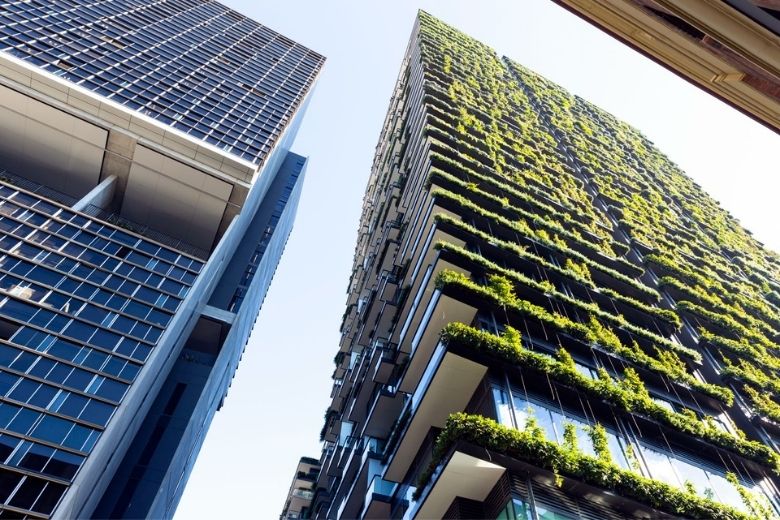
One of the clearest signals of this shift is the growing focus on embodied carbon across the construction value chain. As operational efficiencies improve, attention is turning to emissions embedded in materials from the outset. In cement and concrete, this is a structural challenge that cannot be addressed through incremental change alone. Progress now depends on a combination of lower clinker formulations, alternative raw materials, circular inputs, and carbon capture technologies that are in early development stages.
A circular economy shift changes material sourcing and supply chains toward urban mining
Circular construction is following a similar trajectory. The reuse of construction and demolition materials is no longer viewed solely as a waste-management response. Urban mining is the process of reclaiming raw materials from spent products, buildings, and urban waste, rather than extracting them from the earth through traditional mining. It is increasingly recognized to strengthen supply chains, reduce reliance on virgin materials, and lower embodied carbon. When recycled inputs meet the same performance standards as conventional materials, circularity becomes part of standard delivery models rather than an exception.
The transit infrastructure boom accelerates industrialized construction
Urban density and program certainty are also accelerating the adoption of modular and industrialized construction. Offsite production improves productivity, safety, and reliability, particularly across large infrastructure and transport projects and large-scale urban infrastructure that define the UAE’s next phase of development. These methods are not about speed alone, but about delivering consistency at scale.
Digitalization and AI drive coordination across the construction value chain
Digitalization underpins all these shifts. Data-driven design, predictive maintenance, and integrated project platforms and emerging digital tools are reducing friction across the construction value chain. In a market defined by complexity and ambition, digital capability is becoming essential to coordination, cost control, and delivery discipline.
Taken together, these megatrends point to a construction industry that is becoming more exacting, not more abstract. Sustainability is now determined at specific moments that shape outcomes, during design freeze, material specification, procurement, and execution at scale. The next phase of construction in the UAE will be defined by the ability to deliver lower-carbon, more circular, and digitally coordinated projects under real commercial and technical constraints. Leadership will be judged based on the projects that are delivered consistently, at scale, and to measurable standards.
About Ali Said, Chief Executive Officer, Holcim UAE & Oman
Ali Said is an accomplished business leader with more than 12 years of executive management experience across global markets, driving growth, transformation, and sustainability in the construction sector. As CEO of Holcim UAE and Oman, he leads the company’s strategy to advance sustainable, innovative building solutions aligned with the UAE’s national decarbonization and smart infrastructure goals.
Ali has a strong record in P&L leadership, business transformation, and start‑up operations, launching new ventures and delivering successful turnarounds across multiple regions. Known for his strategic thinking and people‑first leadership, he excels at guiding high-performing, multicultural teams and fostering innovation that delivers measurable results.
He is an active member of Holcim’s Global and Regional Expert Teams, contributing to the Group’s mission toward net‑zero construction. Ali holds an MBA and a Bachelor of Commerce from McGill University and is a CPA with the Quebec Order of Canada. Outside work, he enjoys golf, tennis, and time with his family.
FIND OUT MORE: