The UAE’s AED 30 Billion Stormwater Investment Addresses Infrastructure Built for a Different Era.
The UAE is spending AED 30 billion on stormwater infrastructure for one reason: yesterday’s networks were not designed for today’s realities.
As cities expand and extreme rainfall events place increasing pressure on urban infrastructure, stormwater management is rapidly moving up the agenda for developers, utilities and government authorities. The challenge is no longer simply moving water from one place to another. It is building networks that can continue to perform reliably, efficiently and sustainably for decades to come.
Yet capacity is only part of the equation.
Across the region, many stormwater systems have evolved over decades. Networks have been expanded, upgraded and connected in phases, often using different materials, technologies and design approaches. The result is growing complexity beneath our cities. For infrastructure owners, the challenge is not just building new networks but ensuring that every part of the system works together seamlessly.
“The industry has traditionally focused on individual assets such as pipes, valves and pumping stations,” says Aref Mneimneh, Business Development Manager Middle East, GF MENAT. “The next phase of stormwater resilience will be defined by how effectively these assets work together as one connected system.”

This shift is changing what project stakeholders look for in a partner. Instead of sourcing individual components from multiple suppliers, developers and utilities are increasingly seeking integrated solutions that reduce complexity, improve reliability and simplify long-term operation and maintenance.
For asset owners, solving these challenges requires more than additional capacity. It requires a partner that understands how the entire network functions as a system.
Resilient infrastructure starts where systems connect, reducing operational inefficiencies and lifecycle risks
With more than 200 years of flow solutions expertise globally and decades of experience supporting infrastructure projects across the Middle East, GF understands that resilience is built at the points where systems connect. Whether integrating different pipe materials, extending ageing networks, managing flows or improving access for maintenance, GF helps customers overcome some of the most common causes of operational inefficiency and lifecycle risk.
Rather than treating piping, flow control and network connectivity as separate disciplines, GF brings them together through a complete flow solutions approach. This enables consultants, contractors and asset owners to work with a partner that understands the performance of the entire network, not just individual products within it.
GF StormWise integrates collection, retention, treatment and flow control for smarter stormwater management
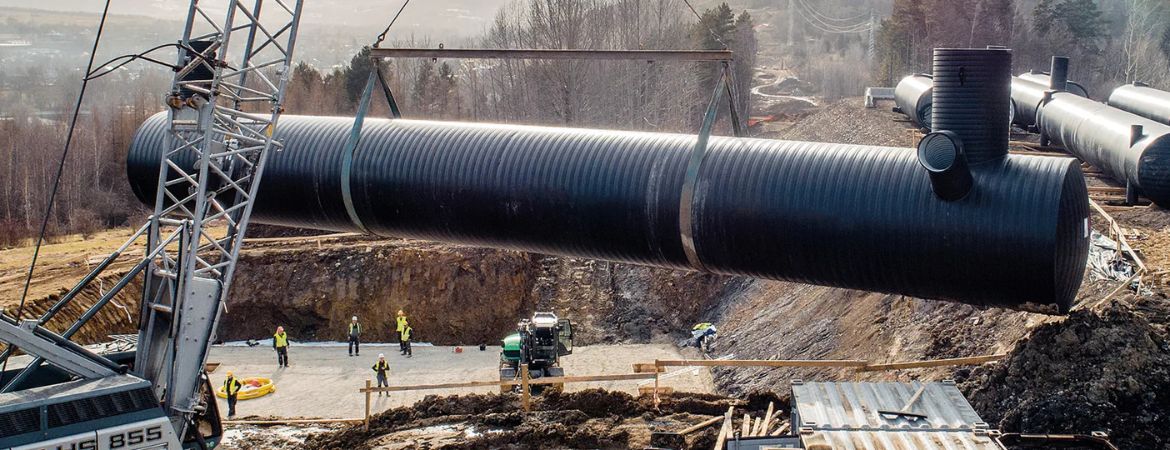
One example is GF StormWise, a stormwater management approach that combines collection, retention, treatment and flow control into a coordinated system. Solutions such as the GF Uponor Vault help improve water quality before discharge or reuse, while retention tanks help reduce pressure on networks during peak rainfall events. Together, they support a more resilient approach to managing stormwater in increasingly complex urban environments.
The result is infrastructure that is easier to install, easier to maintain and better prepared to adapt as cities continue to grow.
“As major initiatives such as Tasreef reshape the future of urban drainage, the industry’s focus is shifting from simply increasing capacity to creating smarter, more connected and more resilient networks. Success will depend on how effectively every element of the system works together under pressure.
That is where GF creates value: helping customers move beyond individual components to build infrastructure designed for long-term performance, resilience and peace of mind.”
FOR MORE INFORMATION: