
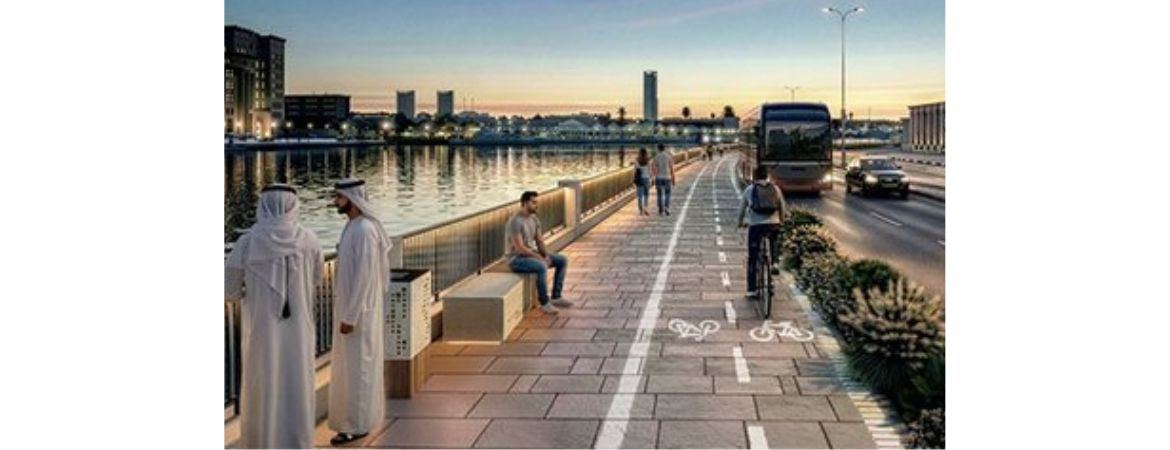
RTA launches Al Ras phase to reshape mobility, connectivity, and cultural identity.
In line with the directives of Dubai’s leadership to transform the emirate into a pedestrian-friendly city year-round, Dubai’s Roads and Transport Authority (RTA) has awarded the contract for Phase I of the Dubai Walk Master Plan in Al Ras, marking a significant milestone in the evolution of urban mobility and public realm design.
12 kilometers of pedestrian pathways and 5 kilometers of cycling tracks
The first phase includes the development of the Historic Al Ras Walkway, featuring 12 kilometers of pedestrian pathways and 5 kilometers of cycling tracks. The project also encompasses the rehabilitation of 10 artistic spaces, delivered in collaboration with Dubai Culture and Arts Authority and with the participation of Emirati and local artists.
His Excellency Mattar Al Tayer, Director General and Chairman of the Board of Executive Directors of RTA, highlighted the strategic importance of the initiative: “The Pedestrian Master Plan plays a key role in strengthening Dubai’s global competitiveness in walkway infrastructure and soft mobility. It advances the objectives of the Dubai Urban Plan 2040, particularly the 20-minute city, enabling residents to access more than 80% of essential services within a 20-minute journey.”

The initiative supports Dubai’s Quality of Life Strategy 2033 by enhancing pedestrian safety, improving connectivity between districts, and integrating cultural and aesthetic elements into urban infrastructure. The project reinforces the identity of key areas while contributing to the overall beautification of public spaces.
Enhancing Connectivity and Urban Experience
The broader Dubai Walk Master Plan outlines the development of a comprehensive and interconnected pedestrian network spanning 160 areas across the emirate. By 2040, more than 6,000 kilometers of walkways will be delivered or enhanced, alongside the construction of 110 pedestrian bridges and underpasses to strengthen inter-district connectivity.
The plan aims to increase the share of walking and soft mobility trips from 16% in 2025 to 25% by 2040, supporting a shift toward more sustainable and active transportation modes.
Revitalizing Historic Al Ras
The Historic Al Ras Walkway will connect key heritage landmarks, including Al Ahmadiya School, Sheikh Saeed Al Maktoum House, Al Ras Public Library, Al Fahidi Fort, and Al Shindagha Historic District. The walkway will also integrate seamlessly with 11 public transport nodes, including metro, bus, and marine stations, enhancing first- and last-mile connectivity.
Design interventions will prioritize preserving the historic character of the area while introducing modern urban enhancements. These include widened pavements, shaded walkways, seating areas, expanded green spaces, and a cohesive wayfinding system aligned with the district’s heritage context.
The project will also feature curated artistic elements, including murals and sculptural installations, complemented by advanced architectural lighting to highlight the area’s cultural identity. Ongoing artistic programming and seasonal events will further activate the space and enrich the visitor experience.
Future-Focused Urban Design
Dubai Walk introduces innovative urban design features aimed at enhancing comfort and usability, including shading systems, misting technologies to mitigate heat, and interactive walkways equipped with digital screens, signage, and recreational elements.
The development also ensures barrier-free access, improved pedestrian safety standards, and the integration of walkways into smart navigation systems and applications. Design elements such as landscaping, lighting, and materials will vary across districts, creating a distinct sense of place and visual identity.
Project Timeline
Phase I of the Dubai Walk Master Plan is scheduled for implementation between 2025 and 2027, with subsequent phases to be delivered progressively through to 2040.
FOR MORE INFORMATION: