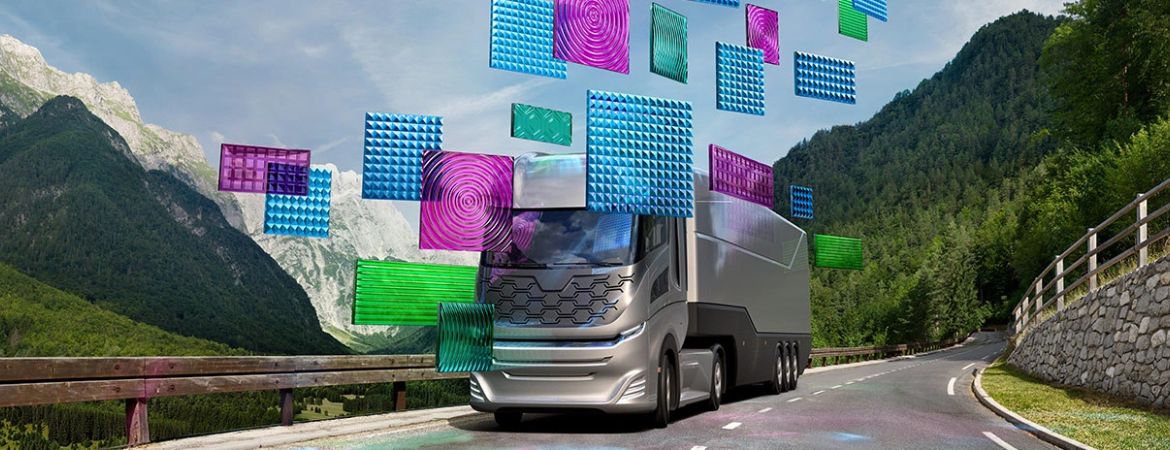
Technology, alternative powertrains and automation are reshaping the global truck industry.
The commercial vehicle industry is facing unprecedented opportunities alongside significant challenges. Rising transport demand driven by global trade, increasingly stringent regulations and a worsening driver shortage are putting pressure on operators and increasing total cost of ownership.
Bosch is responding with technologies designed to improve efficiency, safety and economic performance while opening new opportunities across the commercial vehicle sector.
“The heavy-duty commercial vehicle business is a key growth area for us. We aim to double our sales in this segment by the mid2030s,” said Dr. Markus Heyn, deputy chairman of the Bosch board of management and chairman of the Mobility business sector, at IAA Transportation 2026 in Hannover.

The resilient commercial vehicle market is supporting Bosch’s growth ambitions. While global vehicle production is expected to decline overall in 2026, the heavy-duty commercial vehicle segment, covering vehicles weighing more than six metric tons is proving more resilient.
Following a strong first half of the year, Bosch expects global truck production to grow moderately by around 1 percent to approximately 3.3 million trucks in 2026, before reaching around 4 million units by the mid-2030s.
Based on this forecast and expected technology adoption, Bosch sees potential to double its heavy-duty commercial vehicle technology sales from more than US$4.6 billion today to 2035.
“We’re leveraging our strength as a global systems supplier to accelerate the transition to alternative powertrains and new vehicle architectures,” Markus said.
Bosch’s portfolio spans hardware and software, artificial intelligence and cloud-based services designed to make commercial vehicles safer and more economical. The company is also expanding into new business areas, including plans for a joint venture with Brakes India and Wheels India, subsidiaries of the TSF Group. The venture will develop smart actuators for compressed air generation and treatment, air suspension and parking brakes.
Powertrains for a Changing Global Market
Alternative powertrain technologies remain central to Bosch’s growth strategy. The company is strengthening its position in battery-electric mobility, with Bosch electric motors and inverters powering approximately one-third of newly registered battery-electric trucks in Europe in 2026.
A major new order from long-time partner Daimler Truck further supports this position. The agreement covers the supply of electric powertrain components manufactured in Europe for the eActros electric truck.
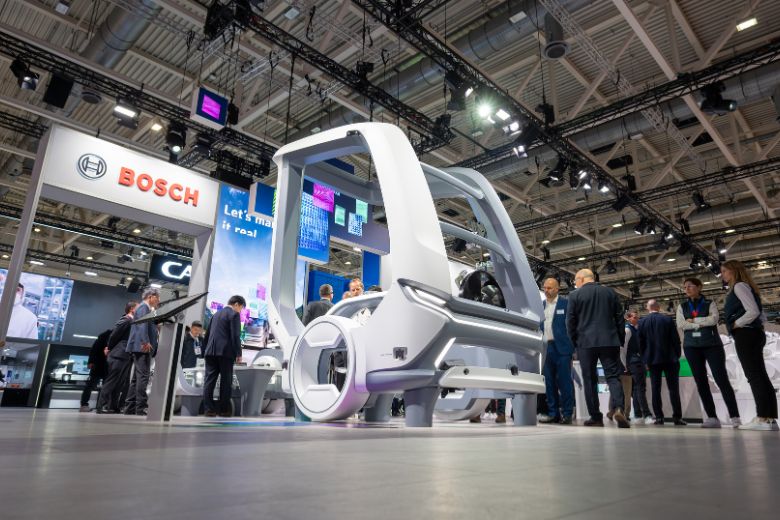
However, the pace of commercial vehicle electrification varies significantly between regions. Bosch expects climate-friendly technologies including battery-electric and fuel-cell powertrains to account for around one in four newly registered heavy-duty trucks worldwide by 2030, increasing to approximately half by 2035.
China is emerging as a major market for electrification, while diesel engines, including hybridized versions, continue to dominate in North America.
“Achieving the world’s climate goals in the transport sector isn’t an ‘either-or’ proposition, we have to use every technology that helps us transition away from fossil fuels,” Markus said. “Batteries are also becoming the lead technology in commercial vehicles, but in heavy-duty long-haul transport and on global markets, they will continue to rely on hydrogen and alternative fuels to supplement them.”
Bosch is therefore pursuing technological diversity. Alongside fuel-cell power modules, the company supplies components for hydrogen-powered combustion engines. It is also continuing to develop diesel technologies and optimize conventional injection systems to help manufacturers meet tighter emissions requirements, including Euro 7. Renewable synthetic fuels could also support emissions reduction across global fleets.
AI and Sensors Enhance Safety
The transformation of commercial vehicles extends beyond powertrains. Safety regulations are becoming increasingly demanding, particularly in Europe, where additional driver-assistance requirements came into force in July 2026.
Emergency braking systems must now reliably identify pedestrians and cyclists, while driver monitoring systems are required to detect both drowsiness and distraction.
Bosch is developing the technologies required to meet these demands. New generations of multipurpose cameras and radar sensors are scheduled for launch in 2027, using advanced AI and greater computing power to improve the detection of people and vehicles.
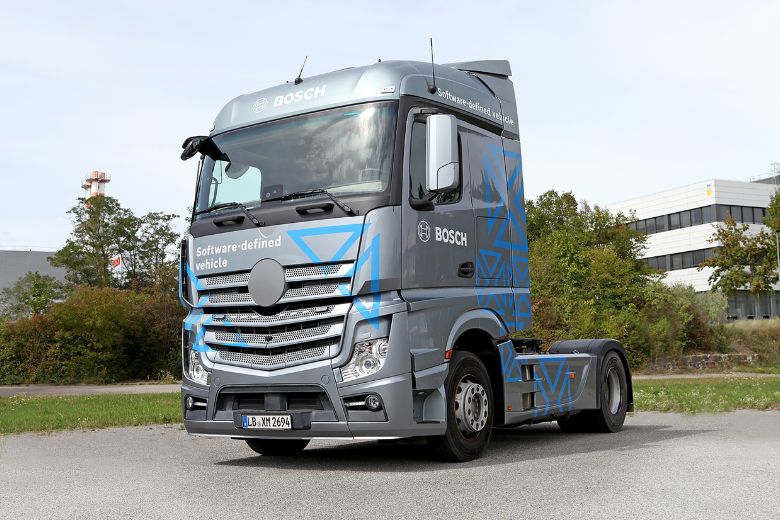
A digital rearview mirror incorporating a camera that analyzes driver behavior and warns of distraction entered mass production in 2026 at two major European manufacturers.
Safety requirements are also becoming more stringent in markets such as India and China. In India, growing demand for advanced driver assistance systems, including emergency braking and blind-spot detection, is supporting Bosch’s work with leading commercial vehicle manufacturers.
By combining data from multiple cameras, radar systems and other sensors, Bosch’s intelligent software algorithms provide a comprehensive view of the vehicle’s surroundings. These systems can also support higher levels of automated driving.
“Level 4 automated driving is the goal, in part to address the driver shortage in the logistics sector,” Markus said regarding the automation roadmap. “The software can handle increasingly complex driving tasks, thus reducing the burden on the logistics system.”
Software-Defined Trucks
Commercial vehicles are generating and processing increasing volumes of data as powertrain, safety, assistance and automation functions become more sophisticated.
At the same time, manufacturers and fleet operators are seeking greater systems integration to reduce complexity and costs. Functions previously distributed throughout the truck are increasingly being consolidated on central computing platforms, while software and hardware are becoming more independent.
This architecture allows new vehicle functions to be introduced throughout a vehicle’s lifecycle, including through over-the-air software updates.
Bosch and its subsidiary ETAS are developing the central electrical and electronic architectures needed to support this transition, including scalable vehicle computers and associated software platforms.
“The software-defined vehicle is gradually becoming a reality in the trucking industry as well,” Markus said.
For commercial vehicle operators, the shift could have a significant impact on total cost of ownership. By integrating hardware, software, data and vehicle functions, software-defined trucks can simplify fleet operations while enabling new features and capabilities throughout the vehicle’s lifecycle.
As Bosch expands its commercial vehicle technology portfolio, the company is positioning systems integration, alternative powertrains, AI-enabled safety and software-defined architectures as key pillars of its strategy for the next generation of global trucking.
FOR MORE INFORMATION: