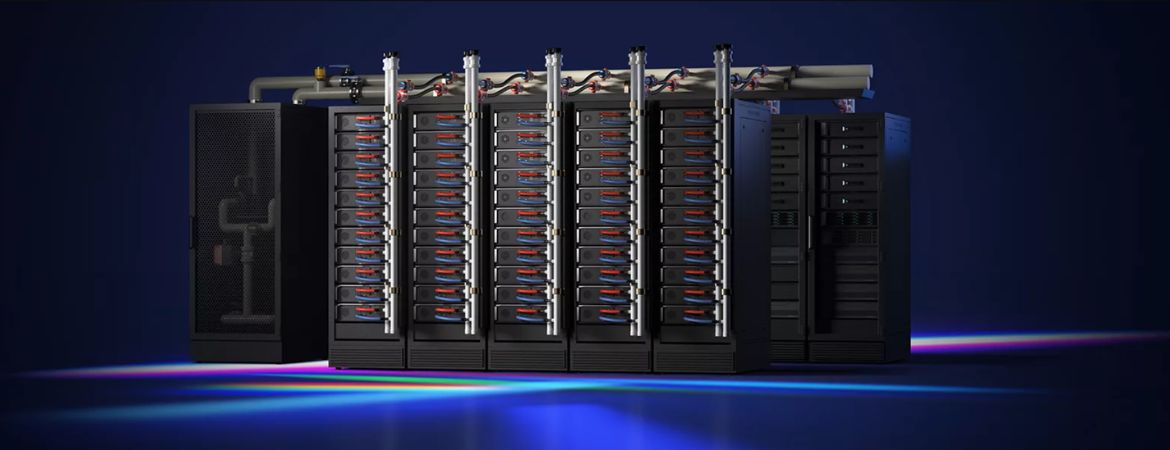
Heat management is becoming as important as power in data centers.
As the UAE continues to develop its digital infrastructure, the conversation around data center performance is expanding beyond power availability and computing capacity. With artificial intelligence and high-performance computing placing greater demands on facilities, the ability to remove heat efficiently and reliably is becoming an equally important consideration.
For data center developers and operators, this presents a challenge that extends beyond selecting the right cooling equipment. The infrastructure responsible for transporting cooling fluids throughout the facility must also be designed to support increasing computing densities, operational continuity and long-term efficiency.

“The cooling technology is only one part of the equation,” says Omar Allam, Regional Solutions Manager, GF MENAT. “What matters is the complete system that removes heat reliably from the facility to the processor. Every part of that architecture has an impact on performance and resilience.”
The infrastructure behind liquid cooling
As computing environments become more demanding, liquid cooling is gaining importance in high-density applications. However, its effectiveness depends on the performance of the entire cooling network.
This includes three distinct closed-loop systems: the condenser water system (CWS), facility water system (FWS) and technology cooling system (TCS). Each has different operating requirements, yet all contribute to the reliability of the overall cooling architecture.
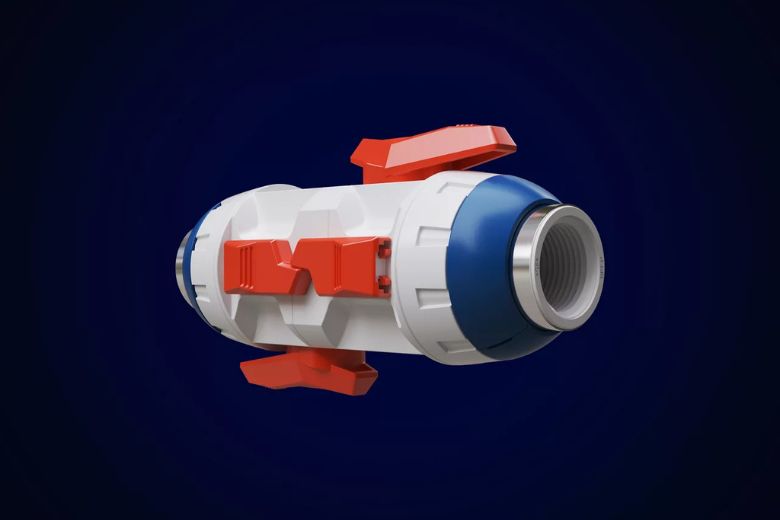
GF supports these applications through engineered polymer piping solutions. For condenser and facility water loops, systems such as ecoFIT, ELGEF and COOL-FIT offer corrosion-free alternatives to conventional metallic infrastructure.
Beyond material performance, considerations such as installation efficiency, maintenance requirements and total cost of ownership are becoming increasingly important when evaluating cooling infrastructure.
Bringing cooling closer to the chip
At rack level, the requirements become more sensitive.
GF’s LiquidCore portfolio is designed to support direct-to-chip liquid cooling, providing the polymer flow path between coolant distribution units and cold plates.
The portfolio includes PP-H solutions for applications involving deionised water and glycol-based coolants, alongside PVDF options for rack-level applications.
Corrosion-free materials help protect sensitive cooling system components
Using corrosion-free materials can help reduce the risk of particle contamination within cooling fluids, an important consideration when protecting sensitive cooling components.
However, material selection is only one part of the solution.
Prefabrication improves quality while reducing on-site installation work
Prefabrication can also improve installation quality by shifting critical assembly work away from the live data center environment. Connections can be quality-checked, pressure-tested and digitally documented before delivery, reducing the amount of work required on site.
With regional prefabrication capabilities in the UAE and Saudi Arabia, GF can support project teams with locally accessible engineering and installation expertise.
Designing for reliability beyond installation
Cooling infrastructure must remain accessible, controllable and maintainable throughout the facility’s operating life.
GF’s Multi Control Valve integrates flow, temperature, energy and pressure sensing, supporting greater visibility into cooling performance. At rack level, the Quick Connect Valve 700 is designed to enable spill-free servicing close to sensitive IT equipment.
Environmental considerations are also influencing material specifications. Environmental Product Declarations (EPDs), for example, provide documented information that can support assessments of embodied carbon and lifecycle environmental impact.
As the UAE advances its data center capabilities, cooling infrastructure will play an increasingly important role in determining how reliably facilities can accommodate future computing requirements.
The challenge is no longer simply to deliver cooling capacity. It is to ensure that every part of the system, from the central cooling plant to the processor, performs as intended.
Because in high-density data centers, resilience depends on the entire flow path.
FOR MORE INFORMATION: