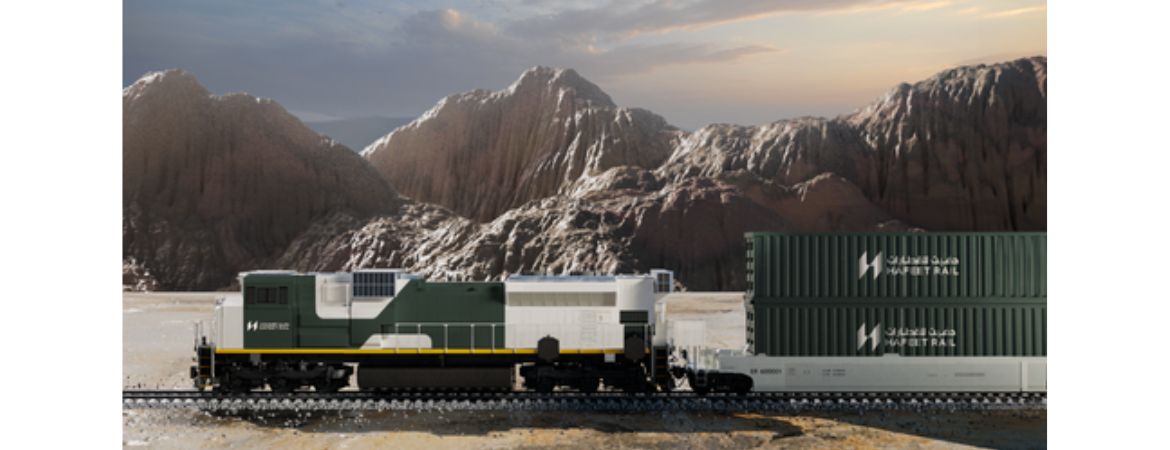
UAE-OMAN RAIL LINK STRENGTHENS TRADE, RESILIENCE, AND GULF INTEGRATION.
Hafeet Rail is far more than a railway project. While its engineering scale and economic potential are significant, its greatest impact may ultimately be geopolitical.
First cross-border GCC railway connection
The landmark rail corridor connecting the United Arab Emirates and the Sultanate of Oman represents one of the most important cross-border infrastructure projects currently under development in the Gulf. Designed to link Sohar Port with the UAE national rail network, the project is creating a new transportation and logistics corridor that will strengthen economic integration between two of the region’s most strategically important economies.
Abu Dhabi and Sohar linked by rail
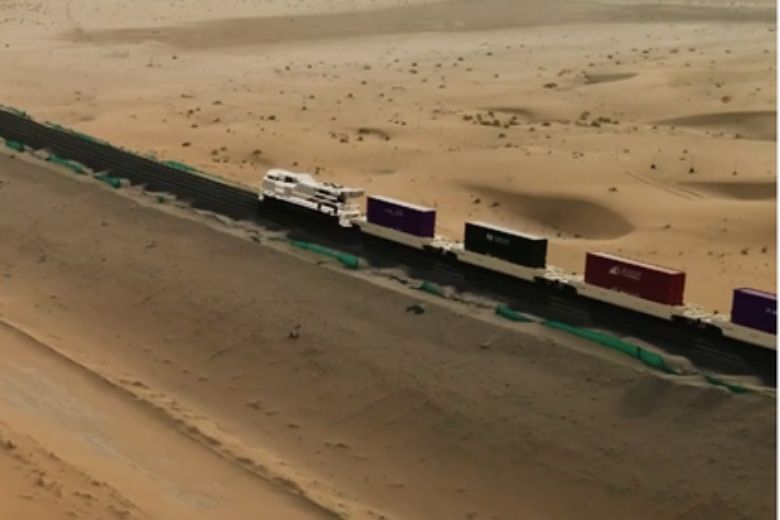
Hafeet Rail is a joint venture between Etihad Rail, Oman Rail, and Mubadala Investment Company. Spanning approximately 238 kilometers between Abu Dhabi and Sohar, the network will accommodate both passenger and freight services. Passenger trains are expected to operate at speeds of up to 200 km/h, while freight trains will carry up to 15,000 tonnes of cargo per journey, dramatically increasing logistics capacity between the two countries.
Enhances supply chain resilience across the Gulf
At a time when global supply chains are being reshaped by geopolitical uncertainty, the importance of resilient transport infrastructure has never been greater. The Middle East sits at the crossroads of international trade routes linking Asia, Africa, and Europe. Recent disruptions to maritime shipping in the Red Sea and wider regional tensions have highlighted the need for diversified transport corridors capable of supporting uninterrupted trade flows. Against this backdrop, Hafeet Rail offers a strategic alternative that enhances regional resilience while reducing reliance on road freight and vulnerable maritime routes.
The railway’s significance extends beyond the movement of goods. It represents a tangible example of deeper economic cooperation between neighboring Gulf states. For decades, GCC leaders have promoted the vision of greater regional connectivity, yet many large-scale cross-border transportation initiatives have remained on the drawing board. Hafeet Rail is among the first major projects to move decisively from concept to construction, with the project reaching significant construction milestones during 2026, including 40% completion and the commencement of track-laying operations.
From a trade perspective, the railway strengthens the relationship between Abu Dhabi and Sohar, two key logistics hubs serving regional and international markets. Sohar Port has emerged as one of the Gulf’s most important industrial and maritime gateways, while the UAE continues to position itself as a global logistics leader. By connecting these assets directly by rail, Hafeet Rail creates a more efficient logistics ecosystem that supports manufacturing, mining, petrochemicals, agriculture, retail, and e-commerce sectors across both countries.
Strategic infrastructure beyond transportation
The project also aligns closely with the economic diversification agendas of both nations. The UAE’s long-term vision emphasizes advanced logistics, trade, and industrial development, while Oman’s Vision 2040 seeks to expand non-oil sectors and attract international investment. Improved transportation infrastructure supports both objectives by reducing costs, accelerating cargo movement, and increasing the attractiveness of industrial zones and free zones along the corridor.
Above all, Hafeet Rail demonstrates how infrastructure can serve as a diplomatic tool. In an era where economic partnerships increasingly shape geopolitical influence, large-scale projects create long-term interdependence that encourages stability and cooperation. Railways, ports, and logistics corridors establish physical connections that often translate into stronger political and commercial relationships.
First cross-border rail link of its kind in the Gulf
For the wider GCC, the project could also serve as a blueprint for future regional rail integration. Hafeet Rail is frequently described as the first cross-border rail link of its kind in the Gulf and could become a foundational component of a broader regional railway network connecting multiple Gulf states. Such a network would significantly enhance trade efficiency, labor mobility, tourism, and economic competitiveness across the region.
As construction progresses toward completion, Hafeet Rail is emerging as one of the Gulf’s most strategically important infrastructure investments. Its success will not simply be measured in passenger numbers or freight volumes. Ultimately, its lasting legacy may be its contribution to a more connected, resilient, and economically integrated Middle East.
In a region often defined by geopolitics, Hafeet Rail demonstrates how infrastructure can become a powerful instrument of cooperation, linking nations not only through steel tracks but through shared economic ambition.
FOR MORE INFORMATION: