

From legacy systems to AI-driven network intelligence.
By Fran Heeran, Vice President and General Manager, Global Telecommunications, Red Hat. Across the global telecommunications sector, service providers are asking a fundamental question: Where is the value? Having spent my career bridging the gap between engineering teams and executive leadership from the early days of GPRS to the rollout of 5G, one reality stands out. Our industry excels at inventing transformative technology, but we have not always connected that innovation directly to profit and loss.
For years, telecom’s “state of the union” was defined by a gap between hype and commercial return. Today, as we move deeper into 2026, that narrative is shifting. The era of costly experimentation is giving way to something far more pragmatic: the rise of the common telco cloud, a unified foundation delivering operational efficiency, consistency, and new revenue opportunities while enabling AI, automation, and modernization at scale.
In high-growth markets such as the Middle East and North Africa, where national digital agendas and enterprise transformation are accelerating, this shift carries particular urgency.
One Platform, Any Application, Anywhere
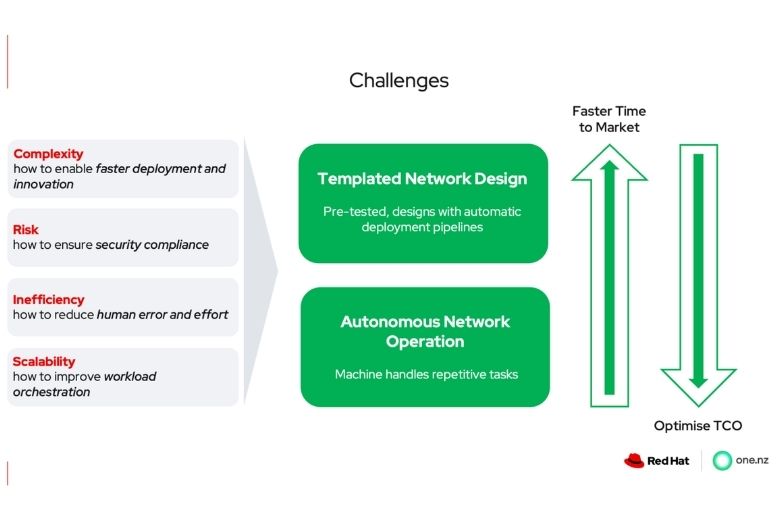
The age of vertical silos is ending. Telecom networks have traditionally been built on multiple vendor stacks, each with its own management tools, lifecycle processes, and hardware dependencies. The result has been fragmented infrastructure that is complex to scale, expensive to maintain, and difficult to secure. These silos continuously drain both capital and operational expenditures.
The common telco cloud changes that model entirely. It establishes a single, consistent platform that extends from centralized data centers to radio sites and out to the enterprise edge spanning private and public cloud environments. Instead of managing disconnected islands, operators manage a cohesive, standardized infrastructure.
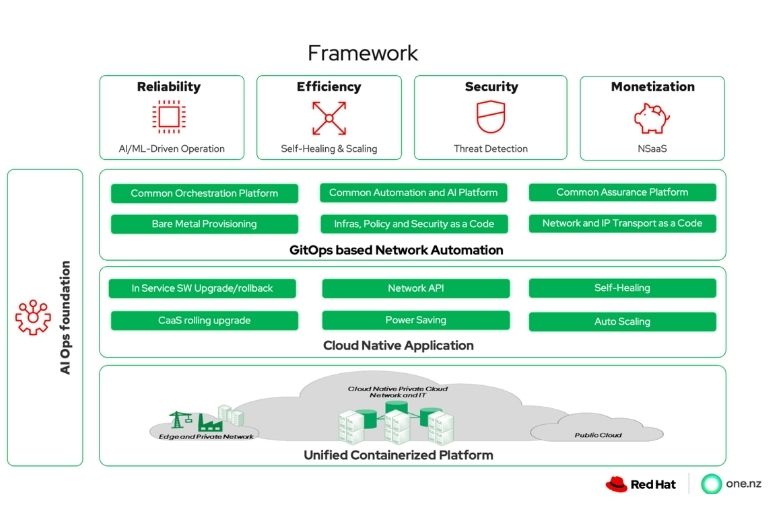
This is not simply an architectural preference. It is the foundation for profitable growth. Standardization reduces complexity, simplifies operations, and creates the stability required to compete effectively in 2026 and beyond.
Modernization Without Disruption
Modernization has often been viewed as synonymous with “rip and replace.” That approach introduces unnecessary risk, particularly when business-critical services are involved.
A transition platform offers a more practical path. By enabling virtual machines (VMs) and cloud-native containers to run side by side on the same foundation, operators can modernize incrementally. Legacy services remain stable while new cloud-native capabilities are introduced using consistent tools and processes.
This balanced strategy de-risks transformation, protects prior investments, and preserves operational continuity, all while building toward a more agile future.
From AI Experiments to the Network Brain
Scaling artificial intelligence across fragmented infrastructure is nearly impossible. When systems operate across multiple silos, AI remains a pilot project rather than a business engine.
In 2026, the shift toward AI-native foundations is accelerating. The objective is not theoretical “AI readiness,” but measurable deployment at scale and at sustainable cost.
A unified telco cloud enables predictive maintenance, automated fault detection, and intelligent optimization. If a network can anticipate failure before a customer experiences service disruption, that translates directly into business value. Beyond operational gains, AI-driven services from advanced fraud detection to personalized enterprise offerings open entirely new revenue streams.
Deployed consistently across thousands of sites, AI transforms the network from a reactive system into a self-optimizing, self-healing digital brain.
Sovereignty and Control as Strategic Assets
As AI becomes central to telecom strategy, data becomes the industry’s most valuable asset. Digital sovereignty is no longer optional. Operators require transparency, auditability, and control whether building AI factories or ensuring compliance with local data regulations.
An open, hybrid cloud model decouples software from hardware, preventing vendor lock-in and giving service providers strategic flexibility. In today’s environment, control is not merely operational, it is competitive currency.
From Months to Minutes
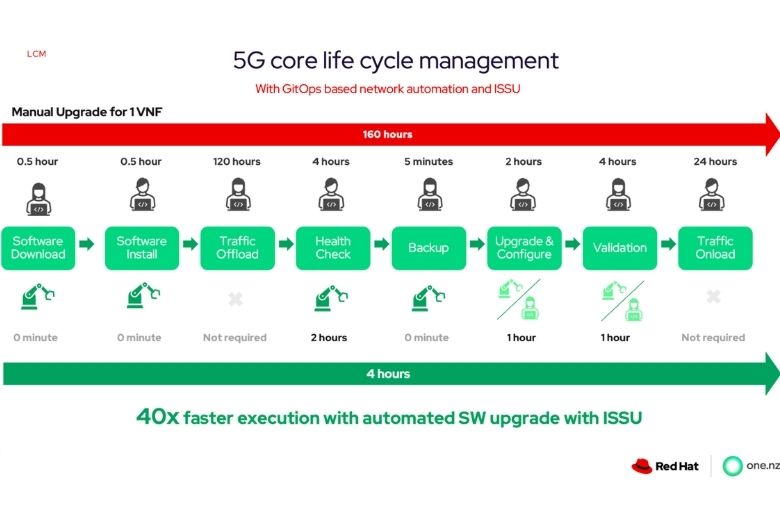
Historically, launching new services could take months of manual configuration. That timeline is no longer acceptable. Intelligent automation, built into a common cloud platform, shifts networks from manual processes to autonomous operations.
The result is agility. Enterprises demand rapid deployment of tailored services. Operators that can provision, scale, and adapt in minutes rather than months transform their networks into platforms for continuous revenue generation.
A Defining Moment
As 2026 unfolds, the focus has moved beyond experimentation to demonstrable return on investment. Service providers are prioritizing reduced complexity, lower cost structures, and tangible business value.
The common telco cloud is no longer a future aspiration. It is becoming the strategic foundation for adaptability, AI-driven growth, and sustainable competitiveness in a rapidly evolving digital economy.
For more information: